
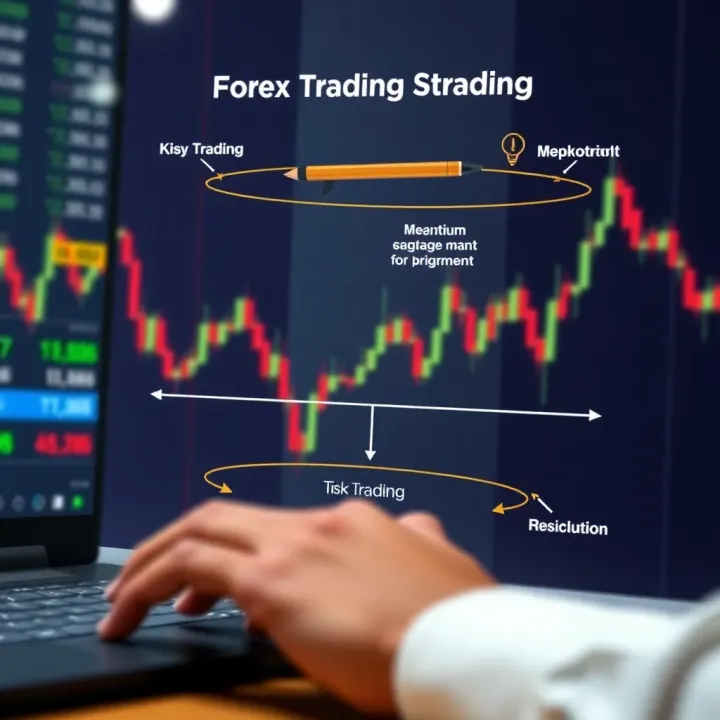
Forex Trading Basics for Nigerians Explained
Discover key forex trading insights 🇳🇬 Learn how it works, strategies, risks & tips tailored for Nigerian beginners to trade smart and stay informed 💹
Edited By
Emily Foster
Venturing into forex trading can seem like jumping into the deep end without a life jacket. But it doesn't have to be that way. This article lays out the basics plainly, so you won’t feel lost in all the charts and jargon.
Forex, or foreign exchange, is simply the act of buying one currency while selling another, usually with the goal of making a profit when the value shifts. For folks in Nigeria, this market can be both an opportunity and a challenge because of local factors like currency fluctuations and economic policies.

We’ll cover what forex trading really involves, the key terms you’ll hear tossed around (like pips, lots, and leverage), and practical advice on how to manage risks. You’ll also get to know some common strategies used by traders, which can give you ideas on how to approach your own trades.
Whether you’re an entrepreneur curious about diversifying your investments or a financial analyst wanting a refresher on the forex scene, this guide sets the stage for understanding how the forex market ticks and how you can start making sense of it all.
Forex trading isn’t about luck; it’s about understanding when to step in and when to step back. Getting the basics right is your best move.
Getting a solid grip on the basics is the first step to navigating the forex market without hitting too many bumps along the way. Forex trading is like the beating heart of international finance—everyone from businesses to governments keeps tabs on it because it influences so much of the world economy. Whether you're a trader, investor, broker, or analyst, understanding what makes forex tick helps you make smarter choices and spot chances others might miss.
For instance, imagine a Nigerian exporter who needs to convert dollars earned abroad into naira. Changes in forex rates can make or break their profits. That’s why knowing how forex markets work isn’t just for pros—it’s practical for anyone dealing with international money flows.
Forex, or foreign exchange, trading involves buying and selling currencies. It's the largest financial market globally, moving over $6 trillion daily, way beyond the stock market's daily turnover. This massive scale means forex is highly liquid; you can buy or sell currencies pretty much anytime without waiting around.
A typical day sees currencies like the US dollar, euro, and Japanese yen traded nonstop across time zones—from New York to Tokyo—which means the market never truly sleeps. This non-stop action offers plenty of opportunities but also demands that you keep a watchful eye on factors affecting currency values.
Unlike stock trading, forex isn’t centralized on an exchange like the NSE or NYSE. Instead, it's an over-the-counter market where banks, brokers, and traders connect electronically. This leads to lower transaction costs and the opportunity for leverage, which can magnify gains and losses.
Another difference is the sheer number of pairs you can trade. While stocks are individual companies, forex trading pairs two currencies, like USD/NGN or EUR/USD, making your analysis focus on macroeconomic trends and interest rates instead of company earnings reports.
When you peek behind the curtain, the forex market is bustling with participants each playing unique roles. Major players include:
Central Banks: eg. the Central Bank of Nigeria or the U.S. Federal Reserve, influencing currency supply.
Commercial Banks: executing large volumes for clients and their own trading desks.
Hedge Funds and Investment Managers: seeking profit or managing currency exposure.
Retail Traders: individuals trading smaller amounts, recently growing fast thanks to technology.
Understanding who’s playing helps you read market moves better. For example, when central banks intervene to stabilize their currency, it can cause sudden and sharp market shifts.
Central banks have the power to slow down or speed up currency movements through policies like changing interest rates or directly buying/selling their currency. When Nigeria’s central bank adjusts the naira’s policy rate, it doesn’t just impact inflation – it ripples through forex rates too.
Financial institutions facilitate most forex transactions, providing liquidity and enabling smooth trades. Retail traders, while smaller individually, collectively add muscle to market demand and supply. Thanks to platforms like MetaTrader and brokers like FXTM or Alpari, Nigerian traders now face the forex world head-on, gaining access to global markets from PC or phone.
Forex trading is a dynamic arena where global events, policy moves, and trader behavior all mix. Grasping how each participant fits in helps you anticipate market sentiment and respond rather than react.
This introduction lays the groundwork for deeper sections delving into how trading works, key terms, and strategy building—ensuring you're not just a spectator, but an informed player in the forex space.
Grasping the key concepts and terminology in forex trading is like knowing the ground rules before playing a game. Without these basics, even the smartest strategies can fall flat. For those stepping into forex trading, understanding these terms clearly can save time, money, and frustration. It also helps avoid confusion when reading charts or talking to brokers.
Every forex trade involves a pair of currencies, where one is the base currency and the other is the quote currency. The base currency is what you're buying or selling, while the quote currency shows how much of that currency is needed to buy one unit of the base. For example, in the USD/NGN pair, if the quote is 380, it means 1 US dollar costs 380 Nigerian naira.
Why does this matter? Well, it directly affects how you calculate profit and loss. If you expect the naira to weaken against the dollar, you’d buy USD/NGN, hoping to sell later at a higher price. Knowing which currency is base and which is quote clarifies the direction of your trade.
Pairs are grouped into majors, minors, and exotics. Majors are pairs like EUR/USD or GBP/USD — they involve the U.S. dollar and have the highest liquidity and lowest spreads. Minors avoid the U.S. dollar, for example EUR/GBP or AUD/NZD, and usually have a bit wider spread and less volume.
Exotic pairs combine a major currency with an emerging market one, like USD/TRY (Turkish lira) or USD/ZAR (South African rand). In Nigeria’s context, USD/NGN is an exotic pair, given the Nigerian naira isn't one of the most traded currencies globally. Trading exotic pairs can mean higher risk and more slippage, but sometimes offer better opportunities for profit if you keep an eye on local economic factors.
The bid price is what buyers are willing to pay for a currency pair, and the ask price is what sellers want. If you’re selling, you’ll get the bid price; if you’re buying, you’ll pay the ask price. For instance, if EUR/USD bid is 1.1200 and ask is 1.1203, you buy for 1.1203 and sell for 1.1200.
This difference isn’t small change—it’s how brokers earn their money, and it affects your profitability. Knowing this helps you understand why sometimes you see your position start in the red right after opening.
The spread is simply the gap between the bid and ask prices, and it varies by currency pair, market conditions, and broker. A tight spread (like 1-2 pips on EUR/USD) keeps your costs low, but currencies like USD/NGN might have spreads above 5 pips, especially during low liquidity hours.
Traders should consider spreads carefully since a wide spread can eat significantly into profits. For beginners, it’s better to stick with tight-spread pairs in active hours to reduce unnecessary costs.
A pip is the smallest price move a currency pair makes, usually the fourth decimal place (0.0001). It’s a key unit to measure gains or losses. Take GBP/USD moving from 1.3050 to 1.3055 — that’s a 5-pip increase.
Understanding pips helps you make sense of price changes without getting lost in the decimals. It’s like measuring distance in meters instead of centimeters.
Lot size determines how many units of the base currency you trade. A standard lot equals 100,000 units; a mini lot is 10,000 and a micro lot is 1,000. Trading 1 standard lot of USD/NGN means you're controlling 100,000 US dollars.
Why does this matter? The bigger the lot, the greater the potential profit or loss per pip. For beginners, starting with micro or mini lots is wise to avoid blowing accounts from wild swings. Position sizing is critical for managing risk wisely.
Remember, forex trading boils down to understanding how much you’re risking on each trade. Knowing your pips, lot sizes, and spreads are the foundation upon which everything else stands.

Clear knowledge of these concepts sharpens your ability to trade better and avoid rookie mistakes. Next, we’ll take a deeper look at how to actually place trades and set up your accounts.
Understanding how forex trading operates is key for anyone looking to step into this market confident. It’s not just about buying and selling currencies randomly; there’s a structure behind each trade, from choosing the right platform, selecting an account type to understanding the mechanics of orders and leverage. This section breaks down those nuts and bolts into practical info you can use right away.
When folks talk about trading forex, they often mention MetaTrader 4 (MT4) and MetaTrader 5 (MT5). These platforms are almost industry standards, thanks to their ease of use and powerful tools. MT4 is great for beginners who want a straightforward interface but still need solid charting capabilities and access to expert advisors (automated systems). MT5, on the other hand, offers more advanced features, like additional timeframes and an economic calendar integrated right on the platform.
Other contenders include cTrader, known for its sleek design and robust charting, plus mobile apps like ThinkMarkets and IG which appeal to traders on the move. Picking a platform will depend on personal preference, device compatibility, and what trading tools you need.
Not all accounts are created equal. Brokers often provide several types: standard, mini, and micro accounts. The difference usually lies in minimum deposit requirements, lot sizes, and sometimes spreads and commissions.
For example, a mini account might require just $100 to start and allow you to trade smaller positions — perfect if you want to test the waters without risking too much. Meanwhile, a standard account might need $1,000 but offer tighter spreads. It’s crucial to consider your budget and risk tolerance when choosing.
Also, watch out for account types that offer fixed versus floating spreads. Fixed spreads stay the same regardless of market volatility, which can be handy for tight budgeting, but floating spreads often become narrower during calm markets, saving costs over time.
When you actually make a trade, there are a couple ways to do it. A market order means you buy or sell immediately at the best available price — if the current price of EUR/USD is 1.1000, you get that rate right away.
Pending orders wait until the price hits a certain level you set. Say you want to buy EUR/USD but only if it drops to 1.0950. You place a buy limit order, and when the price hits that, your order activates. This is handy when you expect a price correction before it moves in your favour.
Using these tools cleverly can mean the difference between popping in and out of trades impulsively or planning your moves based on price action.
In forex, you can profit whether a currency goes up or down. Going long means you buy, betting the currency will increase in value. So if you buy GBP/USD at 1.2500 and it rises to 1.2600, you make a profit.
Going short means selling first, expecting the currency to drop. For example, if you short USD/JPY at 110.00 and it falls to 109.00, you profit from the price difference.
This flexibility is part of what makes forex appealing but also highlights the need to understand market direction and timing.
Leverage allows you to control a large position with a relatively small amount of money. Imagine having a leverage of 100:1 — for every 1 naira of your own, you can trade 100 naira worth of currency. This can amplify profits, making small price moves more impactful.
For example, with $500 and 100:1 leverage, you could control $50,000 in currency. It sounds like a jackpot, but there’s a flipside.
The same leverage that can multiply your gains can also magnify losses. If the market moves against you, losses pile up fast, possibly wiping out your capital and leaving you with extra debt.
This is why setting stop-loss orders is critical when using leverage, to limit your downside. Novices should be extra cautious — it’s better to start with low leverage, like 10:1, and only increase it once you have a solid grasp on the market.
Tip: Always think of leverage as a double-edged sword — handle with care or it might cut your trading account deeper than expected.
By understanding these basics of how forex trading works—from the platforms you’ll use and accounts you'll open, to placing different types of trades and handling leverage–you’re better prepared to approach the forex market with realistic expectations and effective tools.
Creating a solid trading strategy is not just an extra step but a vital ingredient for success in forex trading. Without a plan, trading is like sailing without a compass—you might move, but the direction and outcome are uncertain. Developing a trading strategy helps you make informed decisions, manage risks effectively, and avoid emotional pitfalls that often lead to costly mistakes.
A good strategy takes into account both fundamental and technical factors, ensuring you trade with a clear purpose rather than reacting to market noise. For example, a trader might decide to only enter trades when a currency pair shows a confluence of positive economic news and confirms an upward trend on the chart. This blend increases the chances of making profitable trades.
Economic indicators act as signposts in forex trading, showing the health and direction of different economies. Things like inflation rates, unemployment numbers, GDP growth, and retail sales data give clues about a country’s currency value. For instance, if Nigeria’s inflation rate rises more than expected, the central bank might act, and the naira’s value could shift accordingly.
Understanding these indicators helps traders anticipate market moves before they happen. Instead of guessing, you can watch for key reports—like Nigeria’s inflation released monthly by the National Bureau of Statistics—and plan trades around them. This knowledge keeps you ahead of sudden spikes or drops in currency pairs involving the Nigerian naira or other currencies.
Central banks hold a lot of power over forex markets. Their decisions on interest rates or monetary policies can cause sharp moves. For example, the Central Bank of Nigeria’s stance on interest rates often influences the naira's strength. If they announce a rate hike, expect the currency to strengthen in many cases.
Regularly following financial news and official announcements helps you stay updated and prepare your trades accordingly. Rather than catching market moves after they happen, you'll learn to anticipate them.
Staying alert to central bank announcements and economic news is like having an early warning system for market shifts.
Charts are the bread and butter for technical analysis. They visually represent price movements over different times, from minutes up to months. Forex traders use these charts alongside technical indicators like Moving Averages, RSI (Relative Strength Index), and MACD (Moving Average Convergence Divergence) to gauge market sentiment and price momentum.
For example, the 50-day Moving Average is often used to spot trends. If the price stays above this line, it suggests an upward trend; below it might signal a downtrend. Indicators reduce guesswork by providing objective data points on when to enter or exit trades.
Spotting trends and price patterns is key to timing your trades. Trends can be upward (bullish), downward (bearish), or sideways (neutral). Recognizing them early helps you ride the moves instead of fighting against the market.
Patterns such as Head and Shoulders, Double Tops, or Flags signal potential reversals or continuations. For instance, if you see a Double Bottom pattern on the USD/NGN chart, it might suggest the naira is about to strengthen.
By combining trend identification with other tools, you boost your chances of making smart trades.
Controlling risk means knowing when to cut losses and lock in gains. A stop-loss order automatically closes your trade at a preset price to avoid bigger losses. For example, if you buy EUR/USD at 1.1000, you might set a stop loss at 1.0950 to limit potential loss to 50 pips.
Take profit orders work the other way, closing a trade when your target price is hit, securing your profits before the market can reverse. These tools protect your account from big swings and emotional decision-making.
How much you trade matters more than just what you trade. Managing position sizes relative to your account balance keeps your losses small enough to ride out bad streaks. A common guideline is risking no more than 1-2% of your account on any single trade.
For instance, say you have a $1,000 account. Instead of risking $100 on one trade, which could wipe you out after ten losses, controlling position size to risk $20 per trade helps you survive and learn.
By combining stop losses and sensible position sizes, you create a safety net that keeps your trading sustainable over time.
Navigating forex trading isn’t just about knowing how to buy or sell currencies—it also means managing the bumps along the way. Common challenges can trip up even the sharpest traders, and knowing how to handle them is vital. From emotional ups and downs to dodging shady brokers, and the ongoing need to learn and practice, this section walks you through practical ways to keep your forex journey on track.
Trading often risks turning into an emotional rollercoaster. New traders might panic sell when the market dips or chase profits when things look rosy, forgetting that both moves can be costly. For example, imagine a trader who sees a sudden price drop in EUR/USD and quickly sells without assessing if it’s a short-term blip or a real trend reversal. This knee-jerk reaction often leads to regret.
Recognizing these emotional traps means spotting signs like impatience, fear, overconfidence, or revenge trading after a loss. Keeping a trading journal helps—writing down your feelings alongside trades reveals patterns and triggers. When you know you tend to get jittery after a loss, you can plan breaks or use preset stop losses to protect yourself.
Discipline in trading is what separates hobbyists from professionals. Practical steps include setting clear rules before you trade, like defining your max loss per day or sticking to your trading plan regardless of outside noise. Take the story of a Nigerian trader who commits to closing all positions by 5 pm local time to avoid overnight risks—consistent habits like this guard against rash decisions.
Another handy tactic is mindfulness—regularly check in on your emotions and remind yourself trades are about odds, not certainties. Over time, you train your mind to treat gains and losses evenly, reducing impulsive moves. Discipline also means accepting that losses are part of the game and focusing on the bigger picture rather than single trades.
Forex markets attract plenty of bad actors, so vetting your broker is non-negotiable. Legit brokers are usually registered with financial authorities like the Nigerian Securities and Exchange Commission (SEC) or international regulators such as the FCA or CySEC. Always cross-check license numbers on the regulator’s website.
Also, review broker features: do they provide transparent terms, clear fee structures, and solid customer support? Popular platforms like MetaTrader 4 or 5 are commonly supported by reputable brokers. A quick test is to contact customer service with a question—poor or evasive responses often hint at trouble.
Watch for extravagant promises such as guaranteed profits or no-risk trading—these are classic bait. High-pressure tactics to deposit more money or secretive withdrawal processes also spell red.
Other warning signs include:
Lack of verifiable licensing information
Unusually high leverage far beyond industry norms
No physical office or contact numbers
Negative reviews citing blocked withdrawals or altered trading conditions
Keeping an eye on these helps you avoid losing money to crooked schemes.
Demo accounts aren’t just toys; they’re safe spaces to really test your moves without risking cash. Use them to practice order entry, understand spreads, and experiment with strategies. For instance, try day trading EUR/USD on a demo to see how fast markets move and how slippage affects your trades.
However, treat demo trading seriously—set the same rules you'd use live, like stop losses and position sizes. Switching too quickly from demo to real without a plan is where many stutter.
The forex world is packed with advice, but not all of it is good. Prioritize learning from reputable sources such as Babypips, Investopedia, or courses offered by licensed brokers.
Local workshops or online webinars focused on Nigerian market conditions can add relevant insights. Join trading communities or forums to learn from others’ experiences but always verify what you hear. Consistent learning sharpens your skills and keeps you updated on market changes, which is crucial for long-term success.
Trading forex is a skill well-honed through caution, ongoing education, and mental toughness. Avoiding common pitfalls helps you keep your head above water in the choppy sea of currency trading.
Wrapping up what we've covered is key to getting a good grip on forex trading. After all, the forex market moves fast and can be a bit overwhelming at first, so having a solid recap helps clear the fog. The conclusion offers a chance to highlight the central ideas — from understanding currency pairs to risk management — making sure you're set with the basics before jumping in. It also points you toward practical next steps, so you don't just read but actually put the pieces into play.
Let’s recap the big takeaways:
Forex Market Basics: We looked at what forex trading is, and why it’s different from, say, stocks or commodities. Remember, forex is about the exchange of currencies, pretty much a global game of supply and demand.
Key Terms Demystified: Terms like "pips," "lots," and "spreads" are vital in forex trading and worth mastering early on as they directly affect your trades and profits.
Trading Mechanics: From choosing a platform to placing trades, we've walked through the nuts and bolts so that you know how to get started on the right foot.
Analysis and Strategy: We touched on fundamental and technical analysis approaches, explaining how to read economic news and charts to spot potential trades.
Risk Management: Probably one of the most important parts—how to protect your hard-earned money by setting stop losses and managing how much you put at risk.
Common Pitfalls: Emotional discipline and avoiding scams are essential lessons often overlooked. Staying sharp and skeptical goes a long way.
Picking the right broker and platform is more than just a checkbox; it’s the foundation of your trading experience. A good broker should be regulated by authorities like Nigeria's Securities and Exchange Commission or international bodies such as the FCA or ASIC. This helps ensure your funds are safe and trading conditions fair. Look at the trading platform itself—MetaTrader 4 and MetaTrader 5 remain popular due to their user-friendly interfaces and robust tools. Also, consider factors like spreads, commissions, deposit and withdrawal options, and customer service quality.
Don’t forget to test the platform with a demo account before committing real money. This way, you get comfy navigating charts, placing orders, and managing trades without any risk. For example, if you prefer fast execution and tight spreads, platforms like OctaFX or Alpari might be more suitable.
When you begin, patience and a plan go hand in hand. Starting small is smart—use mini or micro lots to manage your risk. Have a clear entry point based on your analysis, and always set stop losses to cap potential losses. Avoid chasing losses or doubling down impulsively.
Keep a trading journal to jot down why you entered a trade, how you felt, and the outcome. This helps refine your strategy and emotional control over time. For instance, say you spot an uptrend on EUR/USD but economic news hints at upcoming volatility; you might choose to enter with a smaller position or wait for confirmation.
Planning extends beyond the trade itself; schedule regular reviews of your trades and remain updated on economic calendars to keep ahead of market-moving events. This approach keeps your feet on the ground while letting you grow smoother at trading.
Starting forex trading isn’t about quick wins but building steady skills and habits. A careful choice of broker and thoughtful trade planning build a strong base, reducing surprises and boosting confidence.
Discover key forex trading insights 🇳🇬 Learn how it works, strategies, risks & tips tailored for Nigerian beginners to trade smart and stay informed 💹
Learn forex trading basics for Nigerian traders 🇳🇬 including market operation, currency pairs, risk management, and practical starting tips 📈💡
Discover the essentials of forex trading in Nigeria 🇳🇬. Learn key terms, market factors, risk management, and find trusted platforms to start confidently.
Discover the best forex trading apps in Nigeria 🇳🇬! Learn about features, security, and top choices to trade safely and confidently 💹📱.
Based on 12 reviews