
A Practical Guide to Forex Trading for Nigerian Traders
Ready to trade forex in Nigeria? 📈 Understand markets, pick top books, master risk and proven strategies to grow your naira safely. 🇳🇬 Learn practical tips here!
Edited By
Isabella Turner
Forex trading has become one of the fastest-growing investment options in Nigeria, drawing interest from traders, entrepreneurs, and financial analysts alike. This rise isn’t surprising given the global reach of the forex market and the access Nigerians now have through digital platforms and fintech innovations. However, diving in without a solid understanding can lead to quick losses, especially considering the unique economic factors affecting Nigeria such as naira volatility and power supply challenges.
To learn about forex trading effectively, it's necessary to grasp the core concepts first. Forex involves buying and selling currencies in pairs, such as USD/NGN or EUR/USD, where traders aim to profit from changes in exchange rates. Unlike the stock market, forex operates 24 hours a day across different time zones, providing ample trading opportunities but also requiring discipline to manage risk.
Choosing a reliable trading platform is crucial. Nigerians often prefer well-regulated brokers that support local payment methods like bank transfers, USSD, or mobile money. Platforms like FXTM, OctaFX, and Alpari have gained trust locally because they combine ease of use with strong regulation. Before depositing real money, practising on demo accounts will help sharpen your skills without risking ₦.
Managing risk cannot be overstated. The forex market is highly liquid but volatile. Many beginners fall into the trap of chasing quick profits without stop-loss orders or risk management strategies. Setting limits on how much of your capital you expose per trade, typically between 1–3%, helps safeguard your portfolio against unexpected market swings.
Lastly, ongoing education is a must. The forex market keeps evolving, influenced by global events, Central Bank of Nigeria policies, and international trade relations. Reading data from reputable sources, following market news, and joining local trader communities can keep you connected with market trends relevant to the Nigerian environment.
Successful forex trading is not a sprint but a steady climb, requiring knowledge, patience, and smart decisions adapted to Nigeria’s financial landscape.
In the following sections, we will explore practical strategies for selecting suitable brokers, understanding forex charts and indicators, and building a trading plan tailored to your goals and risk tolerance.
Grasping the fundamentals of forex trading is the first step for anyone serious about entering the Nigerian forex market. Without a solid base, you risk losing money or falling for scams often circulating online. Understanding how forex functions helps you make informed decisions instead of guessing, especially in a market influenced by global and local factors like exchange rates and political events.
Forex trading involves buying and selling currencies on an international market, where currencies are grouped in pairs. For example, trading the USD/NGN pair means you are buying US dollars while selling Nigerian Naira, or vice versa. This market is the largest globally, highly liquid, and operates 24 hours a day except weekends, making it accessible to Nigerian traders at different times.
Currency pairs work through the price difference between the two currencies. The first currency in the pair is the base currency, while the second is the quote currency. If USD/NGN shows 460, it means ₦460 is needed to buy one US dollar. Traders aim to predict movements in these rates to profit by selling currencies when prices rise and buying when they fall.
Regarding market hours, Nigerian traders usually find the London and New York sessions most relevant because these markets overlap with Nigerian business hours, increasing liquidity and volatility. The forex market opens Sunday 10 pm WAT and closes Friday 10 pm WAT, but activity peaks between 8 am and 4 pm WAT on weekdays when major financial centres operate.
Understanding terms like pips, lots, leverage, and margin is vital before putting money on the line. A pip is the smallest price move a currency pair can make, usually 0.0001 for most pairs, while a lot refers to the number of units traded. Standard lots equal 100,000 units, but Nigerian traders often start with mini or micro lots for smaller capital.
Leverage allows you to control larger positions with smaller capital by borrowing from your broker. For instance, 1:100 leverage means controlling ₦100,000 with ₦1,000. While leverage can multiply gains, it also increases risks significantly. Margin is the amount you need to keep your trade open; brokers typically require a percentage of the total position.
The spread is the difference between the buy (ask) and sell (bid) prices quoted for a currency pair. A smaller spread means lower trading costs as you pay less to enter and exit trades. Nigerian traders should watch for brokers offering tight spreads, especially during active market hours to maximise profits.
Bid price is what buyers are willing to pay, while the ask price is what sellers want. The actual trade price falls between these two. Knowing these helps traders decide entry and exit points. For example, if the bid price of USD/NGN is 459 and the ask is 460, you buy at 460 and sell at 459, paying the spread cost.
Mastering these basics helps you trade with confidence, reducing costly mistakes often made by beginners in Nigeria.
Understanding these core elements of forex trading lays the groundwork for building strategies that suit Nigerian traders’ unique conditions like naira fluctuations, CBN policies, and market volatility linked to global events.
Picking the right forex broker is more than just a box to tick; it could make or break your trading experience, especially in Nigeria's unique market conditions. A trustworthy broker ensures your funds are safe, trading costs stay reasonable, and your trades execute smoothly. Without this, even the best strategies could struggle to deliver results.
The Central Bank of Nigeria (CBN) plays a key role in regulating financial activities inside the country, but its influence on forex brokers is limited compared to other sectors like banking. It’s important to note that CBN does not officially regulate forex trading brokers directly; instead, it often issues warnings about unregistered operators or scams. This reality means Nigerian traders have to exercise caution and do their due diligence when selecting a broker.
Because local regulation is thin, the reputation and oversight of international regulatory bodies become crucial. Brokers approved by reputable authorities such as the UK Financial Conduct Authority (FCA), Australian Securities and Investments Commission (ASIC), or Cyprus Securities and Exchange Commission (CySEC) offer an extra layer of safety. These regulators enforce strict rules on fund segregation, fair pricing, and operational transparency, which shields traders from fraud or malpractice.
Choosing a broker regulated by credible global authorities reduces risks and builds confidence that your account and trades are handled fairly.
Brokers provide various account types to suit different trader profiles. For Nigerians just starting out, accounts with low minimum deposits — sometimes as low as ₦10,000 — are helpful for testing waters without risking too much. Conversely, professional traders might look for accounts offering tighter spreads and advanced features, even if the minimum deposit is higher.
Always check the fine print for hidden fees or restrictions. For example, some brokers require higher deposit amounts to access certain instruments or better leverage. Being aware of these details prevents surprises and helps you match the broker's offerings to your budget and goals.
The trading platform is your main interface with the forex market, so functionality and reliability matter. MetaTrader 4 (MT4) remains popular globally and in Nigeria due to its user-friendly design, wide range of tools, and customisation options. Many brokers support MT4, which offers charting, automated trading (expert advisors), and mobile access.
Some brokers develop their own platforms with unique advantages, such as simplified interfaces or integrated news feeds. While proprietary platforms can be tailored, they may lack the extensive features or community support of MT4. Trying demo accounts before commitment helps you decide which platform fits your style.
Responsive customer support can save you from frustrating delays, especially in a market that runs 24/5 like forex. Brokers with dedicated Nigerian teams or local phone lines understand the challenges traders face, including network issues or payment hurdles.
Speaking of payments, seamless deposit and withdrawal methods matter deeply. Nigerian traders prefer options like bank transfers via GTBank, Access Bank, or Zenith Bank, alongside payment gateways like Paystack or Flutterwave. The availability of naira transactions reduces unnecessary forex conversion fees and speeds up access to your funds.
To sum up, choosing a reliable forex broker involves assessing regulatory oversight, account affordability, platform usability, and local support. These factors together set the stage for a safer, more efficient trading journey in Nigeria’s dynamic forex scene.
Analysis is the backbone of successful forex trading. Without it, you're essentially guessing the market direction, which can quickly drain your capital. Learning how to analyse forex markets gives you a clearer picture of what drives currency price changes and lets you make informed trading decisions. This skill separates casual gamblers from serious traders, especially in Nigeria’s fast-moving market.
Economic indicators like GDP, inflation, and interest rates are the pulse of a country’s currency value. For instance, Nigeria’s GDP growth signals economic health—strong growth often boosts the naira’s value as investor confidence rises. Inflation, on the other hand, erodes purchasing power, so rising inflation can lead to currency depreciation unless checked by central bank policies.
Interest rates set by the Central Bank of Nigeria (CBN) also play a key role. Higher rates tend to attract foreign investments, strengthening the naira, while rate cuts might prompt capital outflows, weakening it. Following these indicators helps you anticipate major market shifts rather than reacting late.
Political events in Nigeria and abroad have real impacts on currency values. For example, election seasons or policy changes in Nigeria can trigger naira volatility. Abroad, a U.S. Federal Reserve decision to raise rates or geopolitical tensions in the Middle East influence USD or oil prices, which indirectly affect the naira due to Nigeria’s dependence on oil exports.
By keeping an eye on such events, you can avoid getting caught off-guard or spot trading opportunities. When Nigeria’s trade policies shift or OPEC makes production cuts, the ripple effects on forex markets are immediate and measurable.
Charts and candlestick patterns offer a visual snapshot of market sentiment. For instance, recognising a "hammer" candlestick after a downtrend may signal a potential reversal upwards. Trends—whether bullish or bearish—help you identify the general market direction, so you don't trade against the flow and lose money unnecessarily.
Common technical indicators like Moving Averages (MA) smooth out price data to reveal trends. A 50-day MA crossing above the 200-day MA might signal a bullish market, a strategy many traders use to time entries. The Relative Strength Index (RSI) measures the speed and change of price movements to highlight overbought or oversold conditions—helpful to avoid buying when a currency pair is overpriced.
Support and resistance levels mark price points where currencies repeatedly struggle to move beyond. For example, if the USD/NGN rate keeps falling to ₦410 but rebounds each time, ₦410 is a support level. Traders place buy orders near support and sell near resistance to capitalise on these predictable bounces, managing risk more effectively.
Mastering both fundamental and technical analysis equips you to navigate Nigeria’s forex market confidently. They work hand in hand: fundamentals give you the “why,” technicals show you the “when” and “where” to trade.
Combining these approaches improves your accuracy and helps you avoid impulsive trades that often drain traders’ funds.
Effective risk management and a strong trading mindset are essential for survival and growth in forex trading. Without managing risks properly, even the best strategies can lead to heavy losses. Meanwhile, emotions can cloud decisions, eroding profits and confidence. Nigerian traders especially face unique local challenges like currency fluctuations and economic uncertainties, making these skills non-negotiable.
Setting stop-loss and take-profit orders helps you control losses and lock in gains. A stop-loss order automatically exits a trade once the price reaches a certain point to prevent further losses. For example, if you buy USD/NGN at ₦460 and set a stop-loss at ₦450, your trade closes if the rate falls to ₦450, limiting your loss. A take-profit order works the opposite way by selling when a desired profit level is hit, securing gains before the market reverses.
Choosing appropriate leverage levels is vital because leverage magnifies both profits and losses. Many brokers offer high leverage ratios, sometimes 100:1 or more. However, using too much leverage is risky; a small price movement can wipe out your capital quickly. Nigerian traders should start with low leverage, like 10:1 or 20:1, to avoid careless risks, especially since the naira’s value can be volatile due to economic shifts or policy changes by the Central Bank of Nigeria (CBN).
Diversifying trades and avoiding emotional decisions reduces overall risk and improves chances of steady profits. Instead of putting all funds in one currency pair, spread investments across multiple pairs like EUR/USD, USD/NGN, and GBP/USD. Emotional trading, such as chasing losses or entering impulsive trades after bad results, often leads to bigger losses. Keeping a clear, logical approach and sticking to a trading plan is more reliable.
Understanding the psychological challenges is crucial since fear, greed, and impatience are common pitfalls. Many beginners struggle with anxiety when prices move against them or become overconfident after winning streaks. Recognising these emotions helps maintain calm and rational decision-making.
Keeping a trading journal is a practical way to track progress and behaviour. Write down every trade’s entry and exit points, reasons for taking the trade, and lessons learned. This practice sharpens self-awareness and reveals patterns in mistakes or successes, helping to improve strategy over time.
Building patience and discipline is a must for sustainable success. Forex trading isn’t a quick-money scheme but a long-term endeavour. Waiting for the right setups rather than rushing trades prevents unnecessary losses. Disciplined traders follow their risk management rules without exception, which pays off more often than emotional, erratic trading.
Protect your capital with smart risk controls and prepare your mind to handle the ups and downs. This dual approach is what separates serious traders from gamblers in the forex market.
Starting forex trading without a solid foundation is like trying to navigate Lagos traffic without a good sense of direction. Resources and next steps are vital to equip you with the right knowledge and practical skills essential for success in Nigeria’s forex market. They help bridge the gap between theory and practice, guiding you from learning to actual trading while protecting your capital.
Recommended books, online courses and local seminars offer a direct way to grasp forex trading concepts. Books such as "Currency Trading for Dummies" or Nigerian-authored guides provide clear explanations tailored to beginners. Online courses by platforms like Udemy or Coursera give flexible access to structured lessons. Nigerian local seminars and workshops, often hosted by reputable brokers or financial educators, give the extra edge by contextualising learning to local market conditions and CBN regulations.
Using Nigerian forex forums and social media groups is a great way to engage with peers and experts. Communities on platforms like Nairaland, Facebook groups, and Telegram channels allow Nigerian traders to share tips, discuss broker experiences, and troubleshoot issues. These groups also give real-time insight into market rumours or regulatory updates. Yet, approach discussions critically, as not all information shared is reliable; verify before acting.
Following market updates from Nigerian financial news platforms such as BusinessDay, Nairametrics, and Vanguard can keep you informed on events influencing the forex market. Regularly checking these sources helps you understand how local factors like CBN policy decisions, naira exchange rate changes, or political developments affect currency values directly. Staying updated aids timely trading decisions and prevents surprises during volatile periods.
Benefits of using demo accounts include getting hands-on experience without risking real money. Demo accounts offered by brokers like FXTM or Alpari simulate live market conditions, allowing you test strategies and learn platform tools. This risk-free environment helps build confidence and sharpens decision-making skills before entering actual trades.
How to gradually transition to live trading is crucial for protecting your funds. Start by trading small amounts once you feel comfortable with the demo account. Avoid rushing into high leverage or big trades. Scale up slowly as you gain consistent results and understand your emotional reactions under real pressure.
Setting realistic goals for consistent growth means prioritising steady, manageable profits over quick wins. Forex trading is not a get-rich-quick venture; it's about building skills over time. Set achievable targets, like 2–3% returns monthly, and focus on disciplined risk management. This approach prevents costly mistakes driven by impatience or greed.
Trading forex successfully in Nigeria demands a clear plan, ongoing education, and disciplined practice. Using available resources wisely and taking measured steps ensures you build both knowledge and confidence on your trading journey.
Ready to trade forex in Nigeria? 📈 Understand markets, pick top books, master risk and proven strategies to grow your naira safely. 🇳🇬 Learn practical tips here!
📈 Learn practical tips for forex trading in Nigeria 🇳🇬! Understand market basics, risks, regulations, and strategies to trade confidently today.
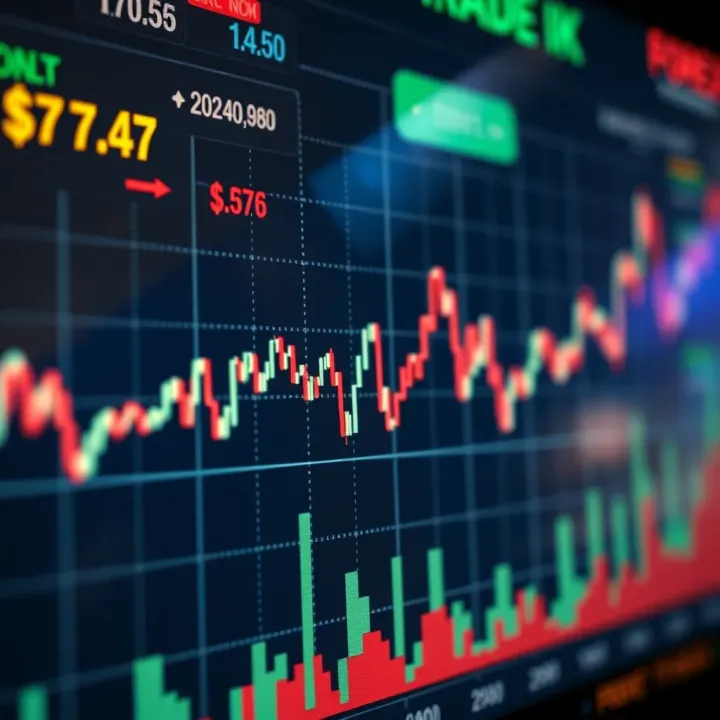
💹 Explore forex trading in Nigeria with this practical guide—learn market basics, strategies, risks, and regulations to trade smart and stay secure.
Discover how to pick the best forex trading signals in Nigeria 🇳🇬. Learn key tips, avoid common traps, and improve your trading with reliable signals 📈.
Based on 10 reviews