
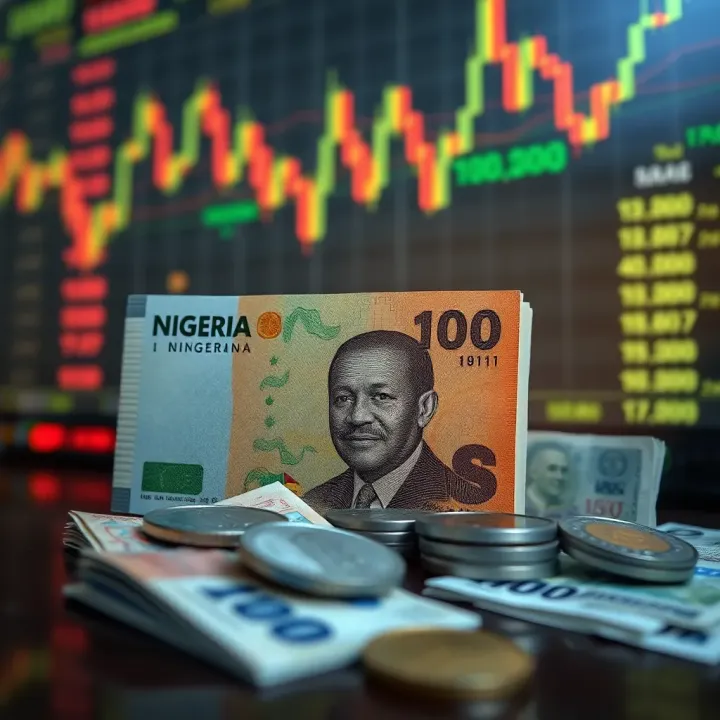
Understanding Forex Trading for Nigerians
📈 Understand forex trading in Nigeria: learn how buying and selling foreign currencies can boost your profits, spot risks, know local rules, and trade safely today!
Edited By
Oliver Hammond
In forex trading, understanding pips is fundamental to making informed decisions. A pip, short for "percentage in point," represents the smallest price move an exchange rate can make. For Nigerian traders dealing in currency pairs like USD/NGN or EUR/USD, knowing how pips work directly affects profit and loss calculations.
Typically, a pip equals 0.0001 for most currency pairs quoted to four decimal places. But for pairs involving the Japanese yen, a pip is 0.01 due to their two-decimal format. For instance, if USD/NGN moves from 460.00 to 460.01, that one-kobo movement equals one pip. This small shift can multiply across larger trade volumes, significantly impacting your bottom line.
They standardise how you measure gains and losses regardless of currency size
They allow you to calculate pip value, helping manage your risk and position size
They serve as the basis for setting stop-loss and take-profit points in your trading strategy
A single pip might seem trivial, but across trades worth ₦1 million or more, it can mean thousands of naira earned or lost.
For Nigerian traders, fluctuations in the naira's value add complexity. Pip value changes depending on which currencies you trade and the size of your lot. Understanding the math behind pip value ensures you can estimate the impact of market moves on your actual naira profit or loss.
In the following sections, we'll explore how to calculate pip value, use pips to manage risk smartly, and see practical examples tailored to the Nigerian forex market. Armed with this knowledge, you can navigate forex trading with greater confidence and improve your chances of making solid profits.
In forex trading, understanding what a pip represents is essential for anyone serious about making profits or managing losses effectively. A pip, short for "percentage in point" or "price interest point," is the smallest price movement a currency pair can make on the forex market. Since forex trading involves exchanging one currency for another, tracking these tiny movements helps traders measure gains or losses with precision.
A pip typically refers to the fourth decimal place in most currency pairs. For example, if the USD/NGN rate moves from 750.1234 to 750.1235, that last digit change is one pip. This minimal price shift might look small, but when trading large volumes, these pips accumulate to significant values. However, there’s an exception for pairs involving the Japanese yen (JPY), where one pip equals a movement in the second decimal place because these pairs are priced differently.
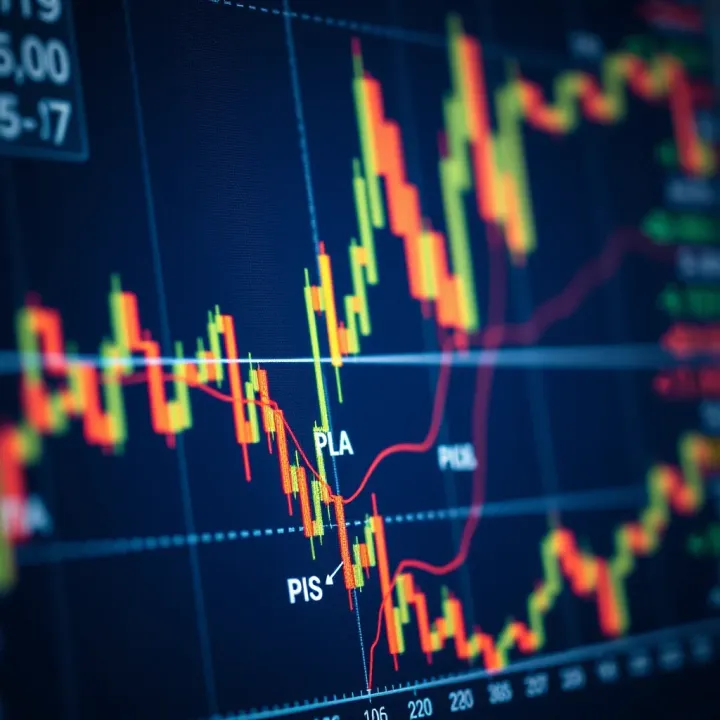
Knowing how to recognise a pip allows you to interpret market changes clearly. It sets the unit by which profit or loss is calculated. For instance, if you bought USD/NGN at 750.1234 and sold at 750.1334, you’d have earned 10 pips. Understanding this basic concept avoids confusion when reading price charts or interacting with trading platforms.
Pips provide a uniform way for traders worldwide—including Nigerian traders—to discuss price changes without ambiguity. Instead of saying "the price moved from 750 to 751," traders would say it moved 100 pips, clarifying the exact shift.
Tracking pips helps you set targets and stop-loss points, crucial in risk management.
Since forex markets can be volatile, especially with local events affecting the naira, knowing the pip value supports informed decision-making. It’s not just about the number of pips but how those relate to your trade size in naira. For a Nigerian trader, a 20-pip movement in USD/NGN could mean a loss or gain of tens of thousands of naira depending on the lot size.
In summary, mastering the pip concept is fundamental before diving deeper into forex strategies or calculations. It’s the ruler by which profitability is measured, guiding traders in the chaotic world of currency exchange. This section lays the groundwork for understanding more detailed aspects like pip calculation and their monetary impact, helping you trade smarter in the Nigerian context.
Calculating pips accurately is a fundamental skill every forex trader must master, especially for those operating within the Nigerian market where currency fluctuations can swiftly influence trading outcomes. Understanding pip calculation enables traders to gauge profit and loss more precisely and manage risks effectively.
For most currency pairs, such as EUR/USD or GBP/USD, a pip represents a movement in the fourth decimal place – that is, 0.0001. To calculate the pip value, you multiply this change by your trade size. For instance, if you trade one standard lot (100,000 units) on EUR/USD, a one-pip movement equals $10. This standard approach helps traders quickly translate price changes into monetary amounts, making it easier to evaluate gains and losses.
Pairs involving the Japanese Yen (JPY), like USD/JPY or EUR/JPY, use a different standard for pip measurement due to the lower value of the Yen. Here, a pip is identified at the second decimal place, i.e., 0.01. So, a change from 110.00 to 110.01 represents a one-pip movement. This subtle difference means traders must adjust their calculations accordingly. For example, in USD/JPY, trading one standard lot means each pip movement is roughly ¥1,000, which can affect the naira value of your trade differently.
Modern trading platforms often display prices more precisely, using pipettes—one-tenth of a pip. This means you might see a price change from 1.20005 to 1.20015, indicating a one-pipette move. This smaller increment allows for more detailed market analysis and tighter spread negotiation. For Nigerian traders, paying attention to pipettes can provide an edge in high-frequency situations or scalping strategies where every fraction counts.
Mastering pip calculation, including standard pips, JPY pairs' special case, and pipettes, is essential to avoid costly mistakes and leverage forex opportunities best.
By getting comfortable with these calculation standards, you improve your ability to make timely, well-informed decisions that protect your capital while aiming for solid returns in the dynamic Nigerian forex landscape.
Understanding how pip movement affects your profits or losses is central to trading forex effectively. Pips represent the smallest unit of price change in currency pairs, so even tiny pip movements can translate to significant gains or setbacks depending on your trade size and strategy.
The size of your trade, often measured in lots, directly influences how much each pip movement will cost you or benefit you. For example, one standard lot in forex equals 100,000 units of the base currency. In this case, a single pip movement—usually 0.0001 for most pairs—can mean a change of about $10 (or its equivalent in naira) in your account. If you trade a mini lot (10,000 units), one pip equals roughly $1, while a micro lot (1,000 units) means each pip is worth about $0.10.
For Nigerian traders, understanding this link is crucial. Suppose you open a standard lot position on the EUR/USD with the current exchange rate at ₦480 to $1. One pip movement upward means ₦4,800 change (₦480 × $10). If your position moves 20 pips in your favour, that’s ₦96,000 profit, but if it goes against you, the loss is just as real. This example highlights why trade size matters: bigger the size, bigger the effect of each pip.
To manage your risk properly, you need to translate pips into actual monetary figures. This calculation depends on your trade size, the currency pair, and the current exchange rate. The general formula is:
Monetary Value of 1 Pip = (Pip Size ÷ Exchange Rate) × Trade Size
Take USD/NGN as an example, with a pip size of 0.0001 and an exchange rate of ₦755 per dollar. For a mini lot of 10,000 units, each pip would be worth:
(0.0001 ÷ 755) × 10,000 ≈ ₦1.32 per pip
While this might look small, multiple pips quickly add up, especially in volatile markets. This calculation also [guides](/articles/understanding-forex-trading-visual-guide-nigeria/) you in setting stop-loss and take-profit orders wisely.

> Remember, without clear understanding of pip values in monetary terms, you risk exposing your capital to losses larger than intended.

By consistently monitoring pip movement in relation to your trade size and converting these movements to naira values, you sharpen your trading precision. Nigerian traders, in particular, benefit by tailoring position sizes to local market conditions and available capital. This awareness helps avoid overtrading and builds a disciplined approach to forex trading.

## Factors That Affect the Value of a Pip

When trading forex, understanding what influences the value of a pip is key to managing your trades properly. The value of a pip isn’t fixed; it depends on a few critical factors which every trader, especially Nigerian traders, must watch closely to avoid surprises in profit or loss.

### Currency Pair Specification

The currency pair you trade directly affects pip value. Pairs quoted with the US dollar (USD) as the quote currency have pip values expressed in the USD, while pairs where the USD isn’t the quote currency may require conversion. For example, if you trade EUR/USD, each pip usually equals $0.0001 per unit of currency. But if you switch to GBP/JPY, pip value behaves differently because the Japanese yen pairs quote to two decimal places, not four. This means a pip in GBP/JPY is 0.01, making the pip value larger per movement. For Nigerian traders trading NGN/USD or USD/NGN on platforms, fluctuations in pip value can impact how much naira you gain or lose, especially since the NGN rate can be volatile.

### Trade Volume and Lot Size

How much you trade influences the monetary value of each pip change. Forex lots come in standard sizes: a standard lot is 100,000 units, a mini lot is 10,000 units, and a micro lot is 1,000 units. If trading a standard lot on EUR/USD, one pip is $10; with a mini lot, one pip is $1. Thus, increasing your lot size multiplies your exposure to every pip move. For traders using local platforms like Kuda or OPay offering smaller trade sizes, this means you can start with micro lots and limit your risk, which is practical given ₦₦₦ constraints many Nigerian small traders face.

### Exchange Rate Fluctuations and Their Effects

The value of a pip also fluctuates because currency exchange rates themselves change. When the base currency’s value moves against the quote currency, pip values shift. Consider the USD/NGN pair; if the naira weakens sharply against the dollar, the pip value in naira terms changes accordingly. This can make profits seem larger, but losses equally more severe. Traders must remember that sudden naira volatility, common during ember months or political events, affects how their pip movements translate to real profit or loss. Besides, brokers may adjust pip values or use fractional pips during high volatility, altering the calculation further.

> Knowing these factors helps you estimate trade outcomes better and build effective risk management strategies in forex trading. Always factor in currency pair specifics, trading volume, and current exchange rates before opening positions.

In summary, pip value is fluid, not fixed. For Nigerian traders, observance of these elements allows smarter trade planning and prevents unnecessary losses. Always start by understanding the pair’s specification, choose a lot size that fits your capital, and stay alert to exchange rate changes for accurate pip valuation.

## Using Pips to Manage Risk and Build Trading Strategies

Using pips to manage risk and build trading strategies is essential for any serious forex trader. Since pips measure the smallest price moves in currency pairs, they help you clearly set limits on potential losses and gains. This precision allows you to protect your capital and plan trades with discipline.

### Setting Stop Loss and Take Profit Levels in Pips

Stop loss and take profit orders are vital risk management tools. Setting these levels in pips lets you define exactly where you want to exit a trade to either cut losses or secure profits. For example, if you buy EUR/USD at 1.2000 and set a stop loss 50 pips below at 1.1950, your potential loss is limited. Similarly, placing a take profit at 100 pips above at 1.2100 means you aim for double the risk amount. Being precise with pips helps avoid emotional decisions during volatile market swings.

### Assessing Risk-to-Reward Ratios with Pips

Before placing a trade, assessing risk-to-reward ratio using pips tells you if a trade is worth taking. Suppose you risk 40 pips (stop loss) for a potential 80 pips gain (take profit); this shows a 1:2 ratio, meaning the expected reward is twice the risk. Traders often look for ratios of at least 1:2 to maintain profitability over time, even if some trades lose. Managing risk consistently with pips helps prevent reckless trading and protects your account from major wipeouts.

### Practical Examples Relevant to Nigerian Traders

Consider a Nigerian trader using USD/NGN or EUR/USD pairs on an online platform like MTN Market or Access Bank's forex trading portal. They might enter a position at 460 NGN per 1 USD with a stop loss 100 pips away to limit loss to ₦1,000 per pip, meaning ₦100,000 risk. Setting take profit at 200 pips away targets ₦200,000 gain, balancing risk and reward.

Another example is a trader who uses lot sizes carefully adjusting their pip value depending on trade volume. For instance, with a micro lot, each pip might equal ₦100, so a 50-pip stop loss equals ₦5,000 risk, manageable for many local traders. These examples show how understanding and using pips properly can guide investment decisions and safeguard capital.

> Learning to manage stop losses, take profits, and risk/reward ratios in pips empowers Nigerian traders to build structured strategies. This reduces guesswork and helps manage the often unpredictable forex market.

Using pips as a yardstick for risk and strategy lets you trade smarter rather than harder, a valuable approach in a market as competitive as forex today.📈 Understand forex trading in Nigeria: learn how buying and selling foreign currencies can boost your profits, spot risks, know local rules, and trade safely today!

Explore how forex binary trading combines quick forex moves with simple yes/no choices 📈. Learn risks, benefits, and how Nigerian investors can trade safely 💹.
📊 Learn how forex trading works, spot risks, and get practical tips tailored for Nigerian investors ready to grow ₦ and trade currencies wisely.
📈 Get a clear view of forex trading in Nigeria! Learn how the global and local markets work, key currency factors, and smart strategies to grow your ₦ safely.
Based on 10 reviews