
How to Make Money with Forex Trading in Nigeria
💰 Learn how Nigerian traders can make steady income with forex trading. Get practical tips on starting out, smart strategies, managing risks, and local market pointers.
Edited By
Amelia Turner
Starting forex trading in Nigeria raises one key question: how much money should you have before stepping into the market? Unlike common belief that forex trading demands a huge capital, the reality is more flexible depending on your goals, strategy, and broker choice.
Normally, brokers in Nigeria allow traders to begin with as low as ₦10,000. However, trading confidently and managing risks carefully usually requires more substantial capital. This gives room to open positions that can absorb market swings without wiping out your funds immediately.
Several factors affect the minimum amount you need:
Broker requirements: Some Nigerian brokers have a low minimum deposit to attract new traders, but their spreads (transaction costs) might be higher, affecting your profits.
Leverage offered: Leverage allows you to control large trades with small capital. For instance, with a leverage of 1:100, ₦50,000 controls ₦5 million worth of currency. But high leverage also increases risk – a few wrong calls can drain your account.
Trading style and strategy: Scalpers opening many small trades need more capital to cover multiple positions. Swing traders who hold trades for days may require less frequent capital injections.
Starting with too little capital may sound appealing, but it often turns trading into a gamble rather than a calculated investment. Proper money is needed to endure market volatility and prevent frequent margin calls.
To balance risk and capital, many Nigerian traders aim to start with around ₦100,000 to ₦200,000. This gives some cushion to trade reasonably sized lots and learn without pressure. Still, it's essential to manage your risks diligently by setting stop-loss orders and not risking more than 1-2% of your capital per trade.
Remember, forex trading is not a get-rich-quick scheme. Preparing an appropriate budget based on your financial strength, risk tolerance, and broker terms is the first step toward lasting success in the Nigerian forex market.
Understanding forex trading and the capital needed to begin is vital for anyone looking to enter this dynamic market. Without clear knowledge, many traders in Nigeria risk starting with unrealistic expectations or insufficient funds, which can quickly lead to losses. For example, knowing the minimum deposit requirements helps prevent frustration when opening an account with brokers and allows you to choose an option that matches your financial capacity.
Having a grasp of forex basics, including how currencies are traded and what influences price movements, also steers smart decision-making. It prepares you to manage your capital effectively instead of diving blindly, risking more than you can afford. For instance, understanding leverage and margin requirements improves your ability to assess how much actual money you need beyond the broker’s minimum deposit.
Forex trading involves buying and selling currencies on the global market to profit from fluctuations in exchange rates. Unlike stocks or commodities, forex operates 24 hours on weekdays, allowing traders from different time zones, including Nigeria, to participate without restriction.
Currencies are traded in pairs, such as USD/NGN or EUR/USD, meaning when you buy one currency, you sell another simultaneously. Traders aim to predict how these exchange rates will change, profiting from differences between the price at entry and exit. It’s a highly liquid market, but also risky, especially without adequate capital and risk management.
Most reputable brokers have minimum deposit requirements ranging from $10 to $500, converted to Nigerian Naira depending on the exchange rate. Some platforms welcome new traders with as little as ₦5,000, which suits beginners on a tight budget. However, these low deposits often come with limitations, such as reduced leverage or restricted access to certain account features.
For example, a broker allowing a ₦10,000 minimum deposit might only offer micro accounts, which handle smaller trade sizes, preventing catastrophic losses but also limiting profit potential. Understanding broker deposit policies allows Nigerian traders to pick platforms that align with their budget and trading goals.
Most Nigerian beginners often start with between ₦20,000 and ₦100,000. This range offers a balance between affordability and practical trading opportunities. With ₦50,000, you can comfortably open a mini account on several brokers, allowing you to experience live trading conditions with manageable risk.
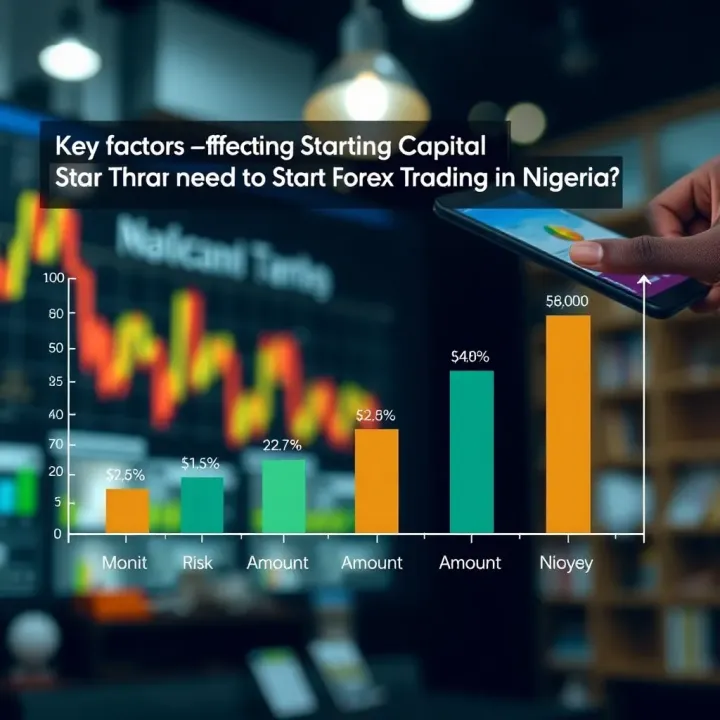
Starting with too little, say under ₦10,000, may restrict position size and lead to frequent stop-outs, making it hard to sustain or grow your capital. Conversely, investing beyond ₦100,000 early on might expose you to more significant losses without solid experience. Gradual capital scaling—starting small and adding funds as your skills improve—is usually more effective.
Many Nigerian traders underestimate initial capital needs. Knowing broker requirements and typical startup amounts helps prevent early setbacks and sets you on a sustainable trading path.
Ultimately, understanding these essentials allows you to plan realistically, manage risks better, and avoid overcommitting funds you cannot afford to lose.
Starting point capital in forex trading depends heavily on specific factors that shape how much money a trader will need upfront. Understanding these elements helps Nigerian traders plan wisely and avoid common pitfalls.
Different trading styles demand different amounts of capital to begin effectively. For example, scalping, which involves making quick trades throughout the day, usually requires smaller capital since positions are held for just minutes. Yet, it demands fast execution and close attention, which might not be suitable for all. Day trading also requires accessible capital but typically more than scalping, as trades can last several hours.
Swing trading, which focuses on holding positions for days or weeks, often involves larger capital. This style allows traders to capture bigger price moves but requires patience and more margin to withstand potential fluctuations. For instance, a Nigerian trader opting for swing trading might start with around ₦100,000 to ₦300,000 to comfortably manage positions over time.
Long-term forex trading, meanwhile, demands even more capital since the trades last weeks or months. Traders need sufficient funds to hold through market swings without forced closure. This style suits traders who can afford to lock in capital for extended periods and prefer slower but steadier growth. For example, a beginner planning long-term trades may set aside ₦500,000 or more.
Leverage is a tool allowing Nigerian traders to control large positions with smaller amounts of their own money. For example, a leverage of 1:100 means you can control ₦100,000 in the market with just ₦1,000 deposit as margin. This can drastically reduce the initial capital requirement.
However, while leverage lowers barriers to entry, it raises the stakes. Higher leverage can magnify losses quickly if the market moves against you. Many brokers offer leverage up to 1:500 but Nigerian traders should use this cautiously. Excessive leverage often leads to wiping out capital faster than expected, especially if risk management tools like stop-loss orders aren't in place.
Brokers provide different account types to suit varying budget levels, which affect the starting capital needed. Micro accounts allow trading with very small lots and may require as little as ₦5,000 deposit, making them suitable for total beginners testing the waters.
Mini accounts come next, usually requiring deposits around ₦50,000 to ₦100,000. These accounts offer greater flexibility in position sizes, fitting traders with moderate funds who want more serious exposure.
Standard accounts often require deposits of ₦300,000 or more. They provide access to full lot sizes and advanced features but demand significant capital, ideal for experienced traders confident in managing larger positions.
Choosing the right account and understanding trading styles and leverage levels shapes how much money you need upfront. It’s wise to start small, learn the ropes, and scale gradually with experience and results.
Clearly, the amount needed to start forex trading in Nigeria isn’t a fixed figure but a mix of personal strategy, broker options, and risk tolerance. Aligning these factors is key to entering the forex market well-prepared.
Managing risk and preserving capital stand as the pillars of successful forex trading, especially for those just starting out in Nigeria. Trading currencies is inherently volatile, and without proper safeguards, traders can face rapid and severe losses. Getting a solid grasp on risk management helps you protect your hard-earned money and stay in the game longer.
Knowing how much you can afford to lose is vital before opening any trading account. Never use money meant for essentials like rent, food, or bills. Instead, allocate a separate amount strictly for trading — think of it as money you’re ready to lose without it hurting your daily life. For instance, if you have ₦100,000 set aside, be prepared that some or all of it might vanish as you learn the ropes.
Separating trading capital from living expenses avoids a dangerous situation where losses affect your basic needs or increase stress levels. This clear boundary also encourages discipline. Imagine a seller at a local market, who wouldn’t use sales proceeds meant to pay school fees to restock goods; similarly, your trading funds should remain distinct from your household finances.
Stop-loss orders serve as an automatic exit point to limit losses on a trade. For example, if you enter a position on the USD/NGN pair at 460 and set a stop-loss at 455, your position will close if the price moves unfavourably by ₦5. This tool prevents emotions from taking over when the market swings.
Position sizing means controlling how large your trade is relative to your overall capital. If your total trading fund is ₦50,000, risking 2% per trade implies you should lose no more than ₦1,000 on any single position. By keeping each trade’s risk small, you avoid major hits and can sustain trading over time.
Solid risk management is not about avoiding losses altogether but about managing them so no single trade can wipe you out.
Combining these strategies—setting stop-loss orders and adjusting position sizes—helps beginners protect their capital and build experience steadily. This approach ensures you don’t fall into common traps like overtrading or risking too much at once, which severally lead traders down the road to ruin in the Nigerian forex scene.
Starting forex trading with limited funds requires more than just capital. It demands smart strategies, discipline, and choosing the right paths to avoid unnecessary losses. These practical tips will guide Nigerian traders to enter the forex market without overstretching their finances.
It’s wise to begin with a small trading account, especially when you’re new to forex. For instance, starting with ₦20,000 to ₦50,000 allows you to learn market dynamics without risking too much. Many brokers offer micro accounts for such amounts, letting you place smaller trades while understanding how factors like volatility and leverage affect your position.
By starting small, you preserve capital and build confidence through experience. As you track your progress and get comfortable with your trading style, you can increase your investments gradually. Scaling up stepwise helps manage emotions and avoids the temptation of chasing big returns too soon, which often leads to quick losses.
Demo accounts are invaluable tools that every beginner should exhaust. These accounts simulate real market conditions without using actual money, allowing you to test trading platforms, strategies, and market analysis tools. For example, you can practice placing orders, using stop losses, or experimenting with different currency pairs on platforms like MetaTrader 4 or 5.
Beyond technical skills, demo trading encourages discipline. You learn how to stick to your trading plan and manage emotions like fear or greed. Nigerian traders can take full advantage of brokers offering demo accounts with no expiry, practising severally before risking their capital.
Choosing the right broker is crucial, especially when working with a tight budget. Look for brokers regulated by reputable authorities and known among Nigerian traders for transparency. Brokers like Alpari, FXTM, and HotForex offer accounts that start as low as ₦10,000, making entry accessible.
Also, verify that the broker accepts local payment methods such as bank transfers through Nigerian banks, debit cards, or mobile money solutions like OPay or PalmPay. This ease of deposit and withdrawal saves time and reduces transaction costs.
Never compromise on broker reliability for low deposit demands. A trusted broker protects your funds and provides cleaner execution, which can make a difference, especially when trading small amounts.
Adopting these practical approaches can help you start forex trading in Nigeria without breaking the bank. Small, steady steps combined with education and wise broker choice build a strong foundation for your trading journey.
💰 Learn how Nigerian traders can make steady income with forex trading. Get practical tips on starting out, smart strategies, managing risks, and local market pointers.
📈 Ready to start forex trading in Nigeria? Learn how the market operates, pick a reliable broker, manage risks, and build confidence with our practical guide for beginners.

Ready to start forex trading in Nigeria? Learn how to pick brokers, fund accounts, master strategies, manage risks, and keep up with naira fluctuations 📈💹

Learn how to start forex trading from home in Nigeria 🇳🇬 with reliable brokers, essential tools, smart strategies, and tips on handling risks and regulations. 📈💻
Based on 10 reviews